

LOVE AND OTHER NASTY MISFORTUNES
On longing for someone I have never met…

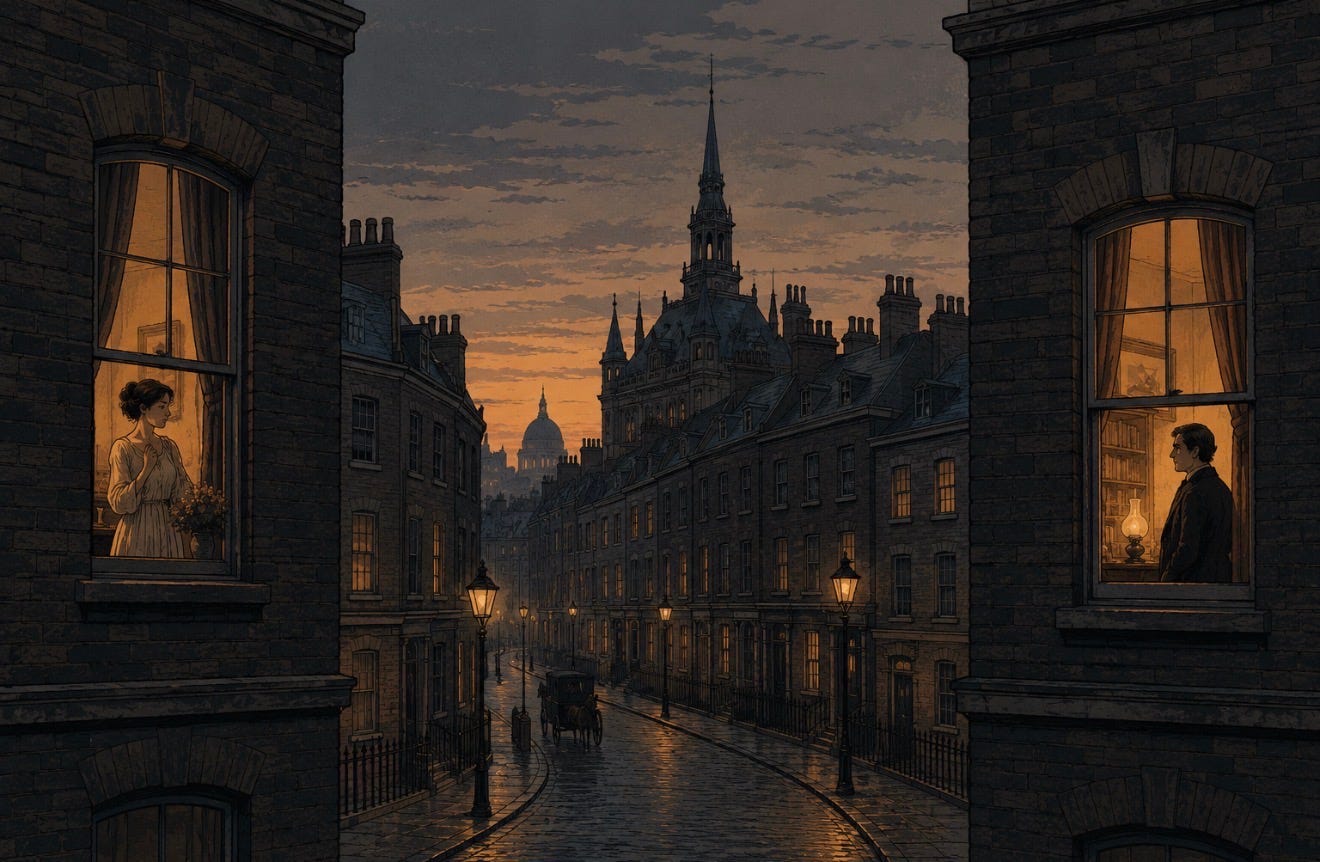
At forty-four, a man believes his inventory is complete. He knows his losses by name. He has learned which hours are dangerous and which merely long. He keeps his accounts in order: griefs amortized, joys hedged, the heart filed away under fixed assets - depreciating gently, as planned.
Then one ordinary day the ledger fails. Something arrives that has no column. It is not happiness; happiness can be scheduled. It is not sorrow; sorrow he would recognize. It is longing - and longing of the most disreputable kind: longing for someone he has never met.
Grammar objects at once. To miss, the verb insists, requires a past: a man misses what his hands have already learned. And yet the feeling stands there in the doorway, wrongly conjugated, refusing to leave. The world has not yet invented the right word, so the wrong one is pressed into service - the way an unexpected guest is seated on the good chair.
The Greeks, who invented most of our misfortunes and named the rest, kept two words where we keep one. Himeros was desire for what stands before you. Pothos was the other one: desire for the absent, for what is elsewhere, for what may not exist at all. They said Alexander marched east not from ambition but from pothos - a longing no map preceded. This detail matters. Longing for the absent does not follow maps. It is what makes them necessary.
What does a man long for, when he longs for someone he does not know?
For a scent never breathed, which he would nevertheless recognize at once - the way one recognizes one's own name, whispered in a room full of strangers. For a color not yet named; such colors exist, waiting, patient as unopened letters. For small transparent hours in rooms he cannot furnish. For a table set carefully every day, for no one in particular. For tea going cold beside an open book. For a lamp left burning past all reason - because reason was never consulted.
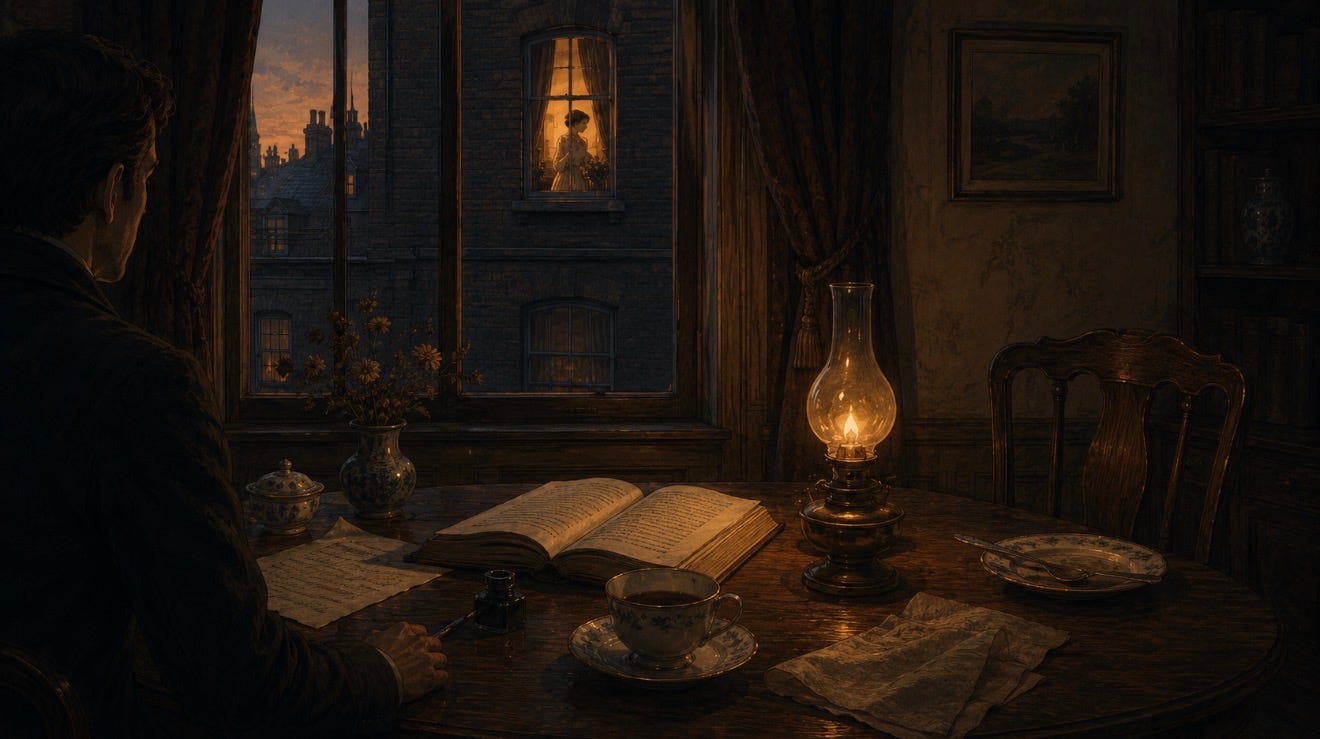
Read back, it is not a list. It is one person, described slowly. That is the metaphysics of it, and the scandal: absence, described with enough patience, acquires a pulse.
I used to think a finished landscape was the reward of middle age. Everything surveyed, everything settled, the mountains where the mountains had always been. I am no longer certain. Nothing moves in a finished landscape - and then, one day, the mountain moves, and a man stands in his own life like a room that has quietly begun to wait.
There is a kind of literature - I have loved it all my life without confessing it - that trembles slightly and is sure of itself in the same sentence. Fevered, the critics say, and they mean it as a warning. Its pages burn long after the book is closed. I understand it better now. Fever is simply honesty running a temperature.
And the ethics of such longing? There is only one, I think. Not to explain it away. Not to demand that it produce papers, a destination, a return on investment. To let it be what it is: evidence. Not proof of a person - longing proves no one - but proof of a window. Somewhere in a man a light goes on that he did not switch, and the only honest thing is not to turn it off merely because he cannot say who it is for.
So I file it where it belongs, under love and other nasty misfortunes - the oldest folder in the archive, and the only one that opens by itself. The hand trembles a little, closing the drawer.
It trembles. And leaves the lamp burning anyway.

I found myself thinking that we often assume love begins with meeting someone.
Your essay suggests something more mysterious: that sometimes the capacity for love awakens first, quietly preparing a space before anyone has entered it. That's a beautiful inversion of how we usually think about longing...
One of the most striking ideas here is that longing doesn’t always point to a person; sometimes it reveals a part of ourselves that had been quietly waiting to awaken. The distinction between himeros and pothos gives that feeling such beautiful clarity. This stayed with me long after I finished reading.