
Born to Die
One hundred years, on my forty-fourth birthday.

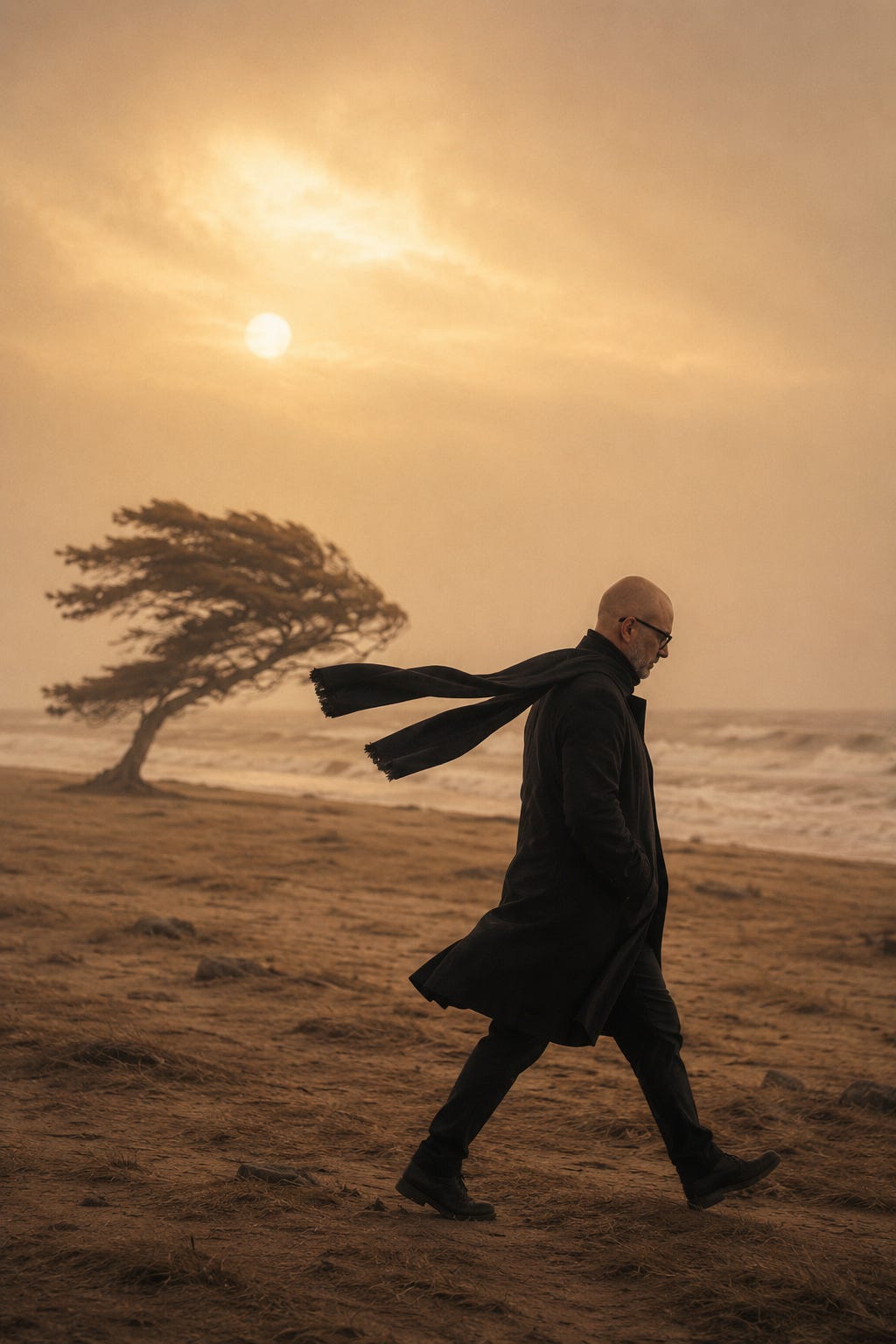
Dominik, my boy, in the ‘k’ mother put, ‘cause that’s how you entered the book of the living, ‘cause sometimes a single letter’s the difference between a boy and the man you address. People would say we two were alike: two drops of water. Water remembers nothing.
I remember everything, keep nothing but what loved me; that’s where any resemblance stops.
You are forty-four today. And your name day, too, since you were born under the patronage of your own name-the fourth of August-as though the calendar had been waiting with the word ready. Forty-four. There’s an ancient prophecy in our tongue concerning this number; for two hundred years it’s been debated, nobody could interpret it.
Today I know what it is.
It means you’re still here. Still here without rehearsal ‘cause no man is taught how to be born and no man will be taught how to depart, amateur at all hours of life, and from this year I no longer call it a fault. But more than any of this, I want to call the boy.
Little Dominik, come here. I know you’re still inside. You never left.
You fell quiet, and quiet is a place too.
I remember you. Chestnut pockets, iodine on knees, May beetles in a jar on the windowsill. You were convinced they were glad in there. You’ve disassembled a radio searching for tiny folk singing.
You were beautiful.
I can say it now, forty-four years late ‘cause boys were not taught to hear beauty then. You were curious as a river, you had to taste everything to understand its course. And then, the black years came and swallowed that boy as if water would swallow a coin, without noise, without rush.
So I say, clearly: we never were good at decoration. You were meant to be dead. There was a time you shook so much my cup was ringing against the saucer and you held your right hand in your left as if carrying a fragile trinket that belonged to somebody else.
You were dying.
Slowly. With a quiet grace, an agony with good manners, the pillow your only confidant. You whispered to it your confessions, took your sweat and your words no one else with a face would listen to, and in the morning it kept quiet as any real friend. I thank it here in writing.
If nothing else would hold us, anyone who does must be given thanks by name, and its name was pillow.
And then, the middle. You remember shaving for the first time. The mirror was cracked in a corner, or maybe the crack was in your eyes, or perhaps in both-the effect’s the same; the razor moved over your face in little afraid steps, a stranger watching from the mirror.
You couldn’t look him in the eye. You finished the left side, rested. Finished the right, sat on the edge of the tub, a grown man made unmanly by a razor, and whispered ‘good’.
One true thing on this day.
It’s from here we began again, you and I. From one truth. And then Robert. I must say the name because politeness that conceals is not manners, and here with the cracked mirror between us, he hands me the shards, one by one.
And I glue, and if a piece doesn’t fit, he waits.
He doesn’t reach to help me. Waits. Slowly I am remembering where my face fits.
He teaches me to lift the fallen from the heap where none fit, to hear my voice under the cacophony. The work is not beautiful. It’s slow, like teaching a hand to write again.
But now I have mornings when the man in the mirror looks back first.
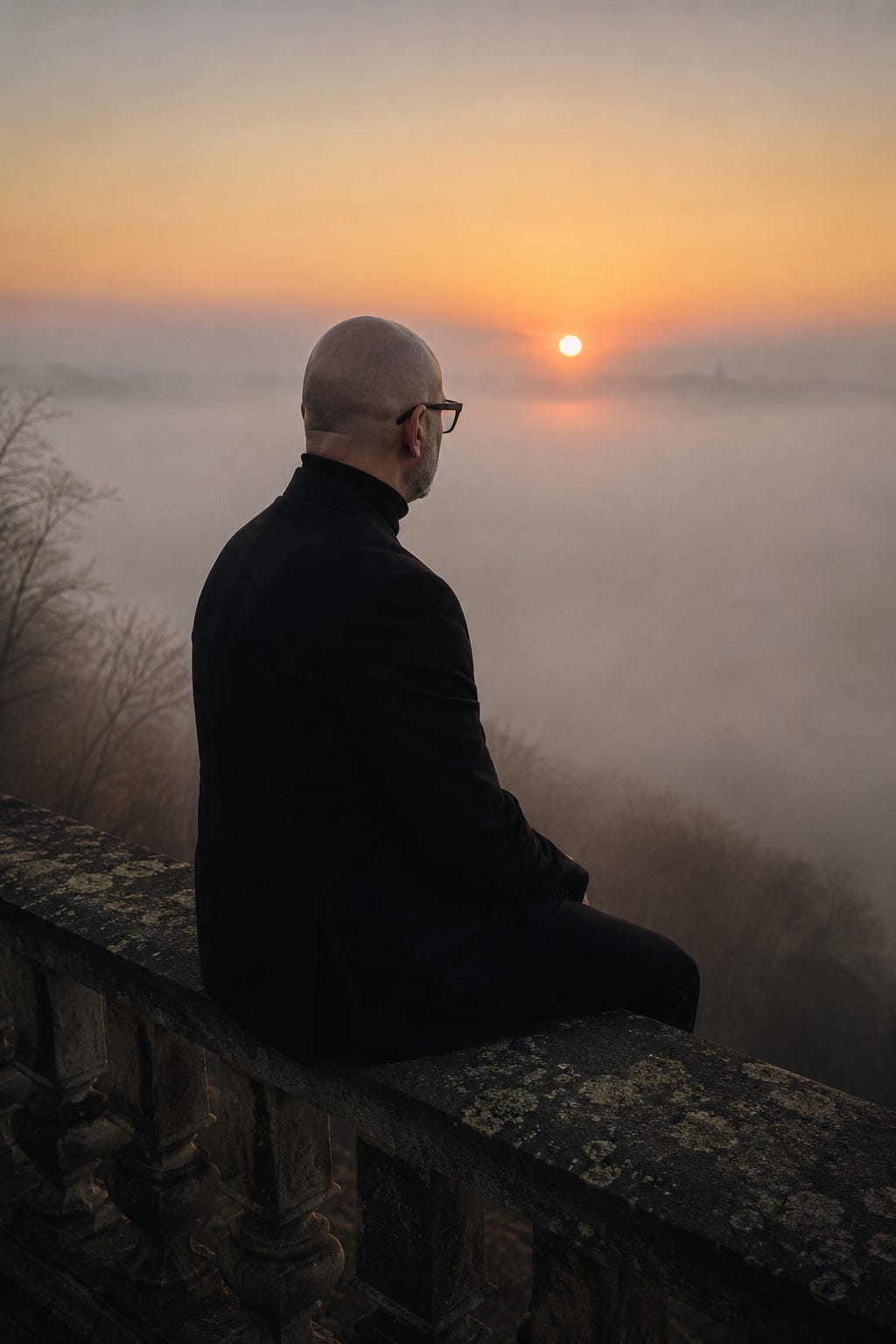
So come, little one. Emerge from the darkness you made safe for us. I am the man now, the hands are steady, it’s fine here. And I lift you up-you weigh nothing, you never did-and I hold you the way mother used to hold us, a hand under your head-’cause that’s where all the world lives.
And I have a promise for you, the hardest a man can give a child: no one will ever harm you from within.
Not even me. Above all, not me. The wreck is over.
From now on, I’ll protect what she made. I won’t sing today. You know how our voice sounds, and anyway, the loudest song was never ours.
We will sit together instead, the two of us, quiet as people sitting at the moment when nothing finally hurts, and this quiet is sto lat.
My sto lat of every unspoken year. I remain silent on our mother and her work of forty-four years ago today, and every time someone calls our name today, let it sound like her calling us from the garden, and let me come. I hold this silence for the two women who carry your eyes on their faces through the world, ‘cause the future I anticipate has faces, and when they come, I will not ask them about their travels; I’ll put the kettle on. On lilacs, I say nothing: they’re long gone by August, though the month still holds their scent behind the apples.
Of the years to come, I am as silent as a man before the threshold of a door about to be opened.
For this will never happen again. Not this morning, not this light on the table where I write. The man I was used to need each day to be the same, and that used to kill him.
The man writing this loves that no two days are alike. The hour is here, so it is already going. It is leaving, and that, I finally learned, is beauty.
For so long I believed nothing.
Today, I believe this; and it shows the extent of what the body can learn. And then, boy on my shoulders, we leave. Not with care. These quiet hands have work to do, have countries to sniff, have books stored like firewood, have souls to learn to love, slow, thorough, the way you loved your jar of beetles, only now we open the lid.
Loving is a skill, Dominik.
We lost it once, and now we are reacquiring it with our hands. May the little house we have inside it have more light than dark, and when it does get dark, may it resemble the weather-dark for a spell, then clear. For now, though, I’ll put us to sleep early, as you’d put to bed a child after a long road.
Happy birthday, Dominik. Your hands are quiet now. You shaved at dawn, steady-handed, in a mirror we glued so well the cracks only show if you look closely, and you met the stranger in the glass; you never looked away.
Nor did he.
Nothing can happen twice. Thanks be to God, nothing can happen twice. Sto lat. Whispered.
Dominic
The decision to address your younger self—and your own name—as both a distinct memory and a continuing presence inside you gives the piece an extraordinary intimacy. Framing the journey through the spelling of ‘Dominik’ with a ‘k’ and the reckoning at forty-four turns what could have been an internal reflection into a sacred, living contract with yourself.
The reference to Mickiewicz's 44 prophecy and Szymborska's 'Nothing can happen twice' woven into your own life story is stunning. Was referencing those cultural touchstones a conscious framework when you sat down to write, or did they surface naturally as you reached this milestone?
“No one will ever harm you from within. Not even me.” Perhaps the most difficult promise anyone can make to the child he once was. This is not simply a memory piece, but an act of retrieval: the boy is not mourned, idealised or left behind; he is lifted onto the man’s shoulders and carried forward. And the cracked mirror is repaired without pretending it was never broken. Strong.